The Potash Ponds Of Moab
- Rachel K
- 19 hours ago
- 3 min read

Imagine standing on the edge of a canyon.
Red cliffs stretch for miles.
The Colorado River winds through the desert below.
And then...
You notice giant squares of brilliant blue water.
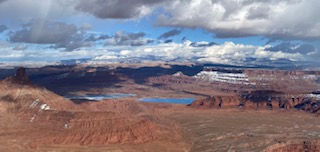
It feels like someone accidentally dropped pieces of the Caribbean into the middle of Utah.
The first time I saw the potash ponds from Dead Horse Point State Park, I thought:
"That doesn't belong here."
Against the deep reds of the desert, those brilliant blue ponds looked almost impossible.
But appearances rarely tell the whole story.
And the deeper story wasn't the color.
It was everything hidden beneath the surface.
But they are not lakes.
They're part of one of the most unusual mining operations in the American West.
Just outside Moab, a company called Intrepid Potash uses these solar evaporation ponds to mine a mineral called potash. That mineral helps grow food all over the world.
But to understand how this works… you actually have to go back much, much further than the ponds themselves.
Millions of years ago, this landscape looked nothing like it does today.
Instead of red rock and open sky, this region was covered by an ancient inland sea.
Geologists call this area the Paradox Basin.
Over time, that sea evaporated, filled again, and evaporated once more.
Layer by layer, it left behind thick deposits of salt and minerals… including potash.
Eventually, those layers were buried deep underground, sealed beneath thousands of feet of rock. And they stayed there… hidden… for millions of years.
Until people came looking for them.
In the early 1960s, mining companies began extracting potash near Moab the traditional way. They dug deep underground shafts. Miners descended more than 3,000 feet below the desert floor into a world of tunnels carved through salt and stone.
It was hot. Tight. Dangerous.
And for a time, it worked.
Until one day, it didn’t.
In 1963, eighteen miners lost their lives in an underground explosion that occurred at the Cane Creek Mine.
The impact reached far beyond the mine itself.
It became a turning point.
Suddenly the question wasn't simply...
"How do we get the potash out?"
It became...
"How do we do it more safely?"
Instead of sending people deep underground, the mining process gradually moved to the surface.
That's where these ponds come in.
Water from the Colorado River is pumped more than 3,000 feet underground, where it dissolves the ancient potash deposits into brine. That brine is then brought back to the surface and spread across hundreds of acres of evaporation ponds. The brilliant blue color isn't there for beauty. A special dye helps absorb more sunlight, allowing the desert to do what it has done for thousands of years: evaporate water.
Month after month, the ponds slowly change color until only potash crystals remain, ready to be harvested.
That potash becomes fertilizer. That fertilizer feeds crops.
And those crops become food on tables around the world.
Standing at Dead Horse Point, it's easy to notice the color.
It's much harder to notice the story.

Researching the ponds reminded me how often appearances hide deeper stories.
It also reminded me that people are often the same way.
We notice what's visible first.
Rarely do we see the layers underneath.
But every place...
and every person...
has a story waiting to be discovered.
Recommended Reading: Disaster at Cane Creek: An Unforgettable Story Especially For Those Who Lived It offers a deeper look at the 1963 mine explosion and the people whose lives were forever changed. If you'd like to learn more about this chapter of Moab's history, it's an excellent companion to this episode.
As an Amazon Associate, I earn from qualifying purchases. If you choose to purchase a book through the links on this page, I may receive a small commission at no additional cost to you. Thank you for supporting Radiant Grace Productions and helping make future episodes possible.
Resources & Further Reading
Learn how the famous blue ponds are created and why they appear so vibrant.
Information about the Moab potash operation and modern solution mining.
Explore the history of the Moab region through exhibits, archives, and one of Utah's richest collections of local oral histories. The museum's oral history archive preserves the voices of longtime residents and offers valuable insight into the people who shaped the area's mining history.
One of the best places to view the potash ponds from above while overlooking the Colorado River and surrounding canyon country.

Comments